
Supreme Court Allows White House Ballroom Construction to Continue While Legal Battle Over Congressional Authority Unfolds
National Sentiment
Divided
What’s Happening at a Glance
- Chief Justice John Roberts issued an administrative stay Friday freezing a lower court order that would have halted construction of a massive White House ballroom complex at midnight
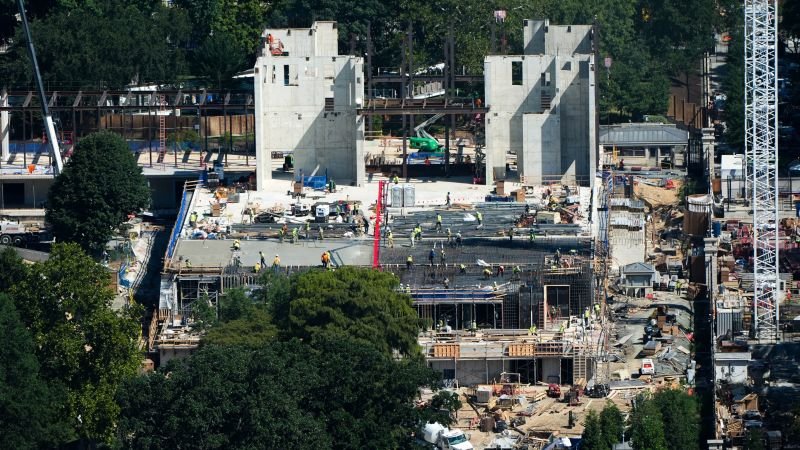
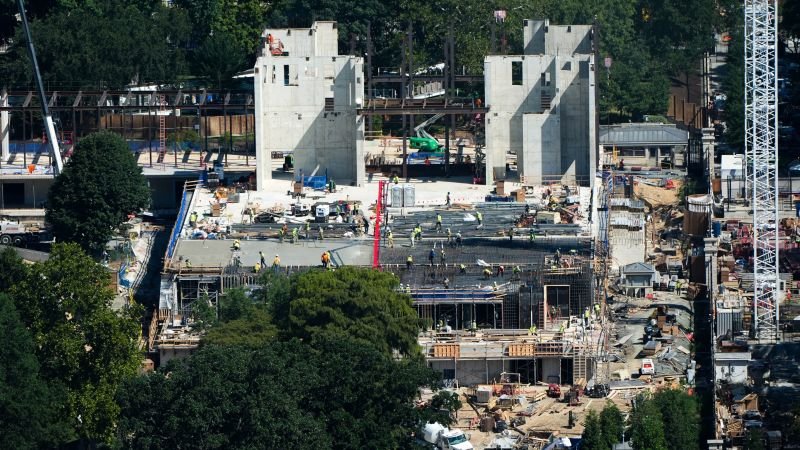
- The project is 65% complete with a 250-person crew working 20-hour days, seven days a week, using specialized concrete described as nearly impossible to deconstruct
- Two lower courts ruled Trump is proceeding unlawfully without congressional approval; the DC Circuit said 2-1 that "whether or not a massive ballroom should be constructed is for Congress to decide"
- Cost estimates have risen from an initial $200 million to nearly $400 million spent, with internal documents showing roughly $900 million for all White House complex changes
- The National Trust for Historic Preservation sued in December, arguing the administration is trying to "outrun judicial review" by accelerating construction
Summary
The Supreme Court has temporarily allowed President Trump to continue construction of a sprawling ballroom complex at the White House, issuing an administrative stay that freezes a federal appeals court ruling requiring work to stop. Chief Justice John Roberts, handling the emergency application from the DC Circuit, did not set a new deadline, meaning construction can proceed until the full Court acts. The project – described by Trump as a "military complex slash ballroom" vital for national security – has been progressing rapidly since the East Wing was demolished last year.
The legal dispute centers on separation of powers. The National Trust for Historic Preservation sued in December, convincing US District Judge Richard Leon that Congress had not authorized the ballroom. While Leon permitted bunker construction to continue, the DC Circuit upheld his injunction against the ballroom in a divided 2-1 ruling, stating Congress must approve such a dramatic redesign of "the People's House." The administration counters that the president has inherent authority to renovate and secure the White House, citing threats against the president's life.
Costs have escalated significantly. The administration initially estimated $200 million, then $300 million, and Trump recently said nearly $400 million has been spent. Washington Post reporting based on internal contracts puts the total for all White House complex changes – including the Rose Garden, helipad, and other projects – at roughly $900 million. The Trust argues the administration is using "nuclear-grade" concrete to make the project irreversible before courts can rule on the merits. The Supreme Court will now consider whether to keep the stay in place indefinitely.
Why It Matters
This case tests fundamental constitutional questions about congressional power of the purse and executive authority over the White House. The Property Clause and centuries of practice give Congress control over federal property expenditures, yet presidents have historically managed White House renovations with varying degrees of congressional involvement. The DC Circuit's ruling emphasizes that "Congress has not ceded unfettered authority to the Executive Branch to dramatically redesign, reshape, and reconstruct the White House." The administration's national-security justification – linking a ballroom to presidential protection – raises questions about emergency powers scope. The use of specialized, nearly indestructible concrete while litigation proceeds suggests a strategy of presenting courts with a fait accompli, a tactic courts have historically viewed skeptically. The standing issue – whether a preservation group member's aesthetic harm suffices for judicial review – could also shape future public-interest litigation against government construction projects.
National Impact
- Government impact: Tests limits of executive renovation authority without congressional appropriation; potential precedent for future presidential projects
- Citizen impact: Taxpayer funds spent on project whose final cost approaches $1 billion without explicit congressional authorization; historic landmark altered
- Business impact: Major construction contracts awarded under accelerated timeline; specialized materials suppliers benefiting
- Community impact: DC residents and visitors face ongoing construction disruption; White House tour access potentially affected
- Institutional impact: Federal courts weighing in on separation of powers; historic preservation laws tested against presidential security claims
Impact on People
- Households: Taxpayers funding project with escalating costs and no final congressional vote
- Communities: DC-area residents experiencing construction noise, traffic, and security perimeter changes
- Public services: White House operations and public tours potentially disrupted long-term
- Education: Constitutional law and historic preservation precedent being set in real time
- Healthcare: Not directly affected
- Public safety: Administration cites presidential protection needs; critics argue bunker suffices without ballroom
Key Organizations & Institutions
- Supreme Court of the United States (Chief Justice John Roberts)
- US Court of Appeals for the DC Circuit
- US District Court for the District of Columbia (Judge Richard Leon)
- National Trust for Historic Preservation
- Trump Administration / Executive Office of the President
- Office of the Solicitor General (D. John Sauer)
- Congress (House and Senate appropriations committees)
- Alison Hoagland (architectural historian, Trust member with standing)
Future Outlook
The full Supreme Court will likely review the stay application in coming weeks. Three outcomes are possible: the Court could keep the stay allowing construction to finish, lift it and enforce the DC Circuit's halt order, or set an expedited briefing schedule for full merits review. Given the project's 65% completion and use of irreversible materials, a final ruling against the administration would raise unprecedented remedial questions – whether to order partial demolition. Congress could also intervene by explicitly authorizing or prohibiting the project. The 2026 midterm elections may influence legislative appetite for confrontation.