
Goodwood's Edge AI Race Car: Because 150 MPH Needed a Phone to Tell the Driver They're Losing Time
Industry Sentiment
Disruptive
What’s Happening at a Glance
- Google Cloud's Gemma AI model ran locally on a Pixel 10 Pro inside a Formula E GEN4 race car, analyzing real-time telemetry at speeds up to 150 mph.
- The hybrid architecture combined on-device processing with cloud access to Gemini, enabling instant feedback on performance metrics like time loss and traction without relying solely on remote data centers.
- The demo illustrates a strategic shift toward embedding intelligence directly into devices and machinery, prioritizing speed, resilience, and data sensitivity over centralized cloud dependency.
- Applications beyond motorsport include manufacturing, logistics, robotics, and industrial equipment, where local AI can improve real-time decision-making and reliability.
Summary
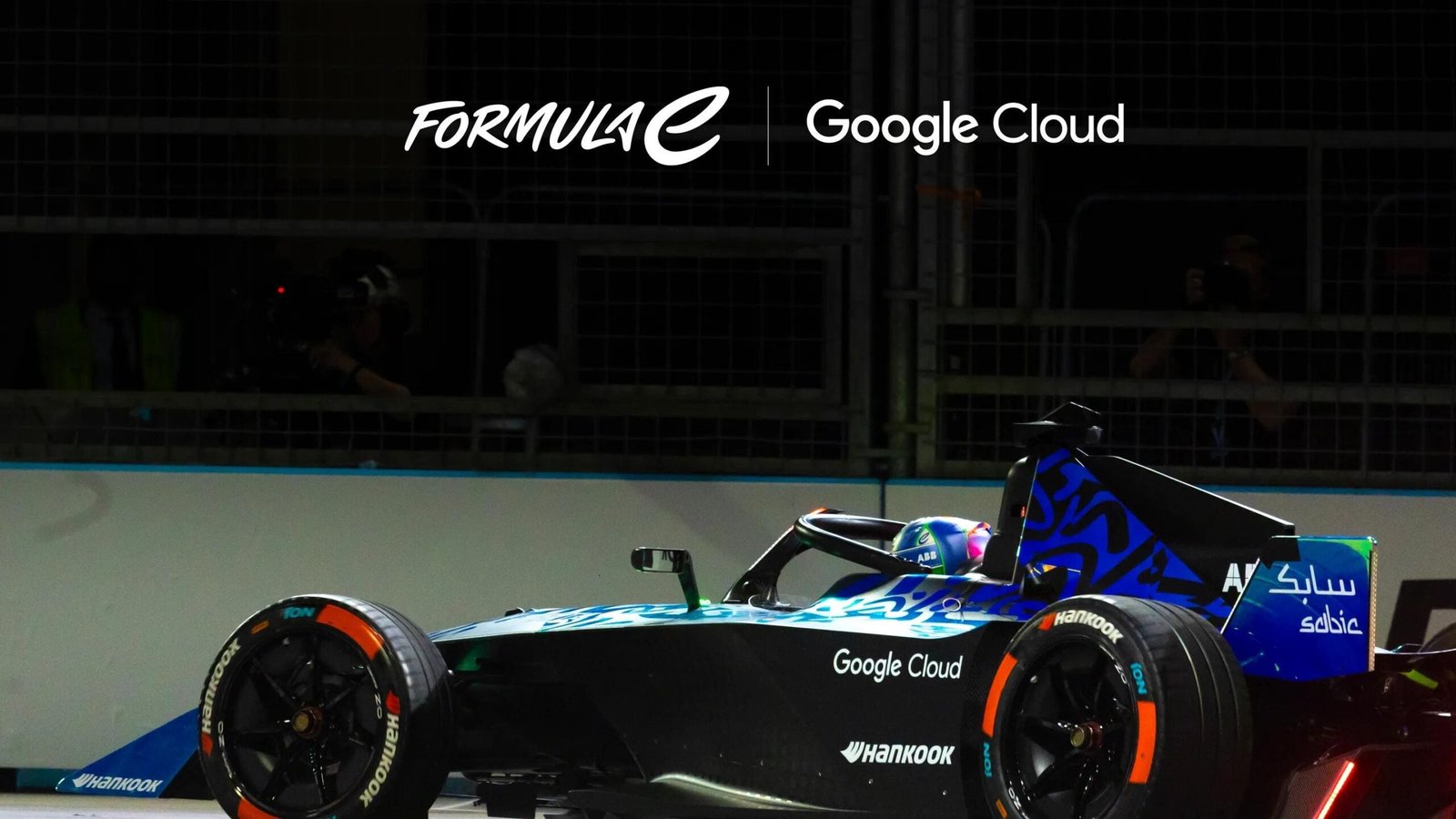
At the 2026 Goodwood Festival of Speed, Formula E driver Dan Ticktum piloted the all-electric GEN4 race car up the iconic hillclimb while a Google Pixel 10 Pro, running the Gemma AI model, analyzed vehicle telemetry in real time. The phone connected to the car's CAN bus, delivering instant feedback on speed loss, traction balance, and other metrics directly to the driver's earpiece within seconds. This edge AI setup used a hybrid architecture: Gemma handled local telemetry analysis on the device, while supplementary data – such as timing feeds and broadcast information – could be fetched from Google's Gemini cloud model when needed. The experiment underscores a broader industry move away from latency-prone, cloud-dependent AI toward distributed intelligence that can operate at the "point of action," even in connectivity-constrained, high-speed environments. By proving that small, calibrated models can deliver actionable insights under extreme conditions, the Goodwood demonstration signals how AI is transitioning from remote chatbots to embedded, real-time decision-makers in factories, vehicles, and infrastructure.
Why This Is Happening
The shift toward edge AI stems from the practical limitations of cloud-dependent models: latency, unreliable connectivity, and the cost of shuttling massive telemetry streams to remote data centers. Companies like Google are investing in hybrid architectures that let devices decide locally whether a task can be handled on-device or needs cloud scale, balancing speed, privacy, and capability. Formula E has long positioned itself as a technology sandbox, and the Goodwood experiment leverages racing's fractional-second precision to validate AI systems that must react instantly. Broader corporate strategy is driven by demand from sectors – manufacturing, logistics, automotive – where real-time insights at the edge can reduce downtime, optimize operations, and enable autonomous decision-making without constant network dependence. This also reflects a maturation of AI tooling, where models like Gemma are small enough to run on consumer smartphones yet powerful enough for specialized telemetry analysis, making embedded AI commercially viable for the first time.
Key Industry Impact
- Big tech: Google's edge AI push challenges the dominant cloud-first AI paradigm, prompting competitors to accelerate their own distributed intelligence roadmaps.
- Startup ecosystem: Lower barriers to on-device model deployment are spurring new tooling startups focused on model compression, local inference optimization, and hybrid orchestration platforms.
- AI development: Increased emphasis on model efficiency, agent-to-agent communication, and context-aware deployment logic that dynamically routes tasks between edge and cloud.
- Jobs/workforce: New roles emerging for edge AI engineers, system integrators, and specialists who can design, deploy, and maintain distributed AI pipelines in industrial settings.
- Consumer market: Faster, more responsive AI experiences in consumer devices, from smarter cameras to real-time vehicle diagnostics, without perpetual internet requirements.
- Regulatory implications: Growing need for frameworks addressing data sovereignty, model accountability, and safety standards for AI systems operating directly on hardware in critical infrastructure.
Impact on People
- Consumer experience: Everyday users may notice snappier, offline-capable AI features in phones, cars, and home devices, with reduced lag and better privacy since data stays local whenever possible.
- Privacy/data: Edge processing limits unnecessary data transmission to the cloud, potentially enhancing user privacy, though it raises questions about on-device data governance and encryption.
- Employment: While AI automation risks persist, the edge AI shift creates demand for technicians, engineers, and developers skilled in embedded systems and real-time analytics.
- Accessibility: Real-time, context-aware AI could improve accessibility tools, such as instant language translation or gesture recognition, even in low-connectivity areas.
- Pricing: Hybrid architectures may help control cloud computing costs, potentially leading to more affordable AI-powered services for consumers and businesses.
- Daily life: Faster response times in smart cars, home appliances, and wearables could make everyday interactions feel more intuitive and less dependent on stable internet.
Emerging Technologies
- AI tools: Lightweight on-device models (e.g., Gemma, Llama Edge), model quantization, and compression techniques enabling complex inference on consumer hardware.
- Hardware: Specialized chips for mobile and embedded inference, sensors for high-frequency telemetry, and hybrid edge-cloud SoCs.
- Software: Frameworks for agent orchestration, dynamic task routing, and real-time telemetry processing; libraries for developing micro-agents that coordinate between device and cloud.
- Platforms: Cloud-to-edge orchestration services (e.g., Google Cloud Vertex AI extensions), IoT platforms integrating AI lifecycle management across distributed devices.
- Infrastructure: Decentralized computing networks, edge servers, and 5G/6G-enabled low-latency communication layers that support hybrid AI workloads.
- Research trends: Focus on tinyML, foundation models adapted for edge deployment, and multi-agent systems that self-organize between local and remote resources.
Key Companies
- Major corporations: Google (Gemini, Gemma, Cloud), Apple (implied in edge AI hardware race), NVIDIA (edge inference platforms), automotive OEMs exploring on-vehicle AI.
- Startups: Emerging firms in model compression, edge orchestration, and real-time AI pipeline tooling (specific names not detailed in source but sector-active).
- Investors: Venture capital firms funding edge AI infrastructure, model optimization, and hybrid cloud-edge architectures.
- Government agencies: Regulatory bodies (FTC, EU AI Act, NIST) increasingly relevant as edge AI deployments expand into critical infrastructure and automotive systems.