U.S. Tries to Force Nations into AI Cold War: Pick a Side or Get Left Out of the Silicon Party
Industry Sentiment
Competitive
What’s Happening at a Glance
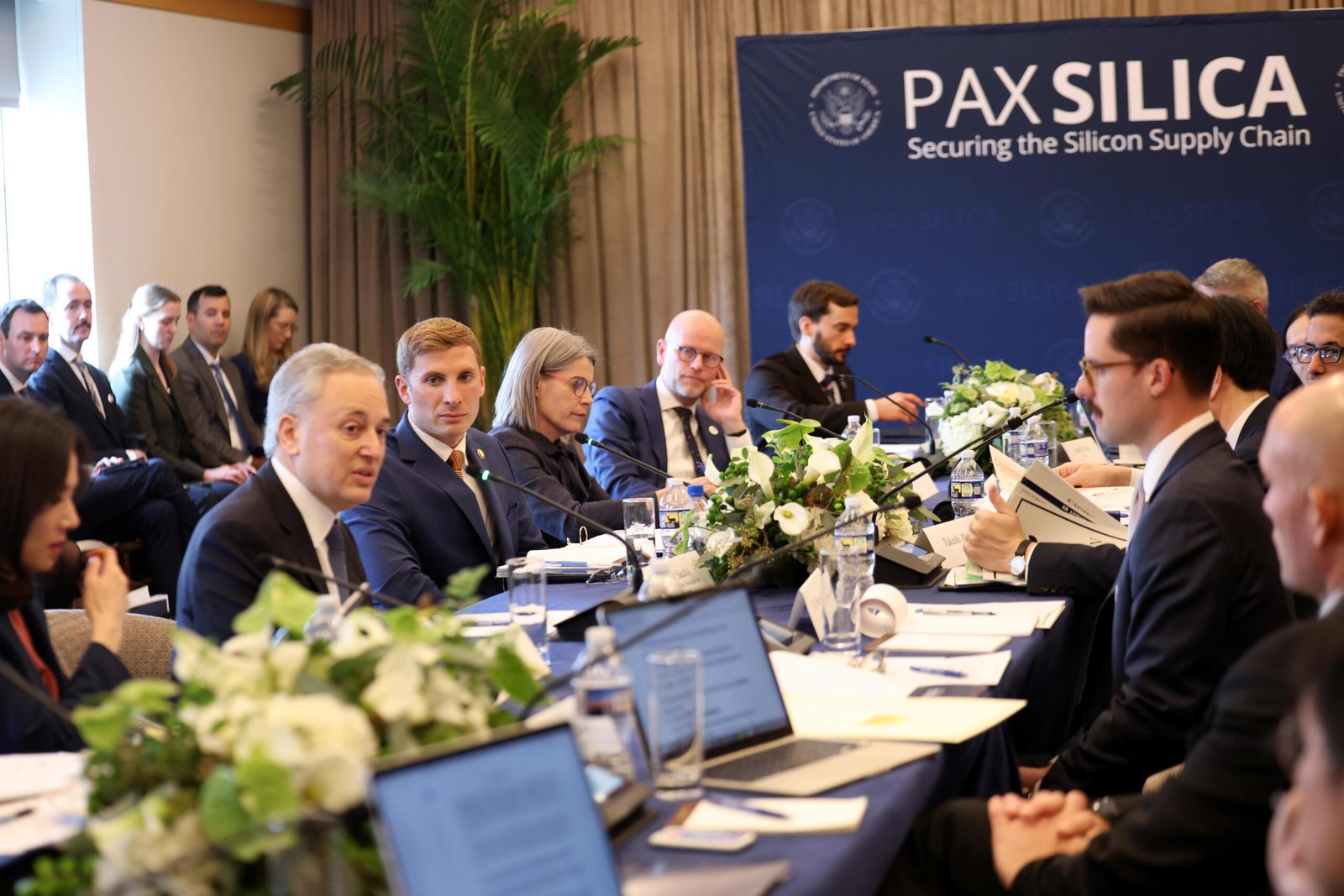
- Washington is drafting a letter that will pressure 35 AI‑aligned countries to choose between the U.S. Pax Silica coalition and China’s World AI Cooperation Organization.
- The move aims to choke China’s access to critical minerals, AI models, and semiconductors by making dual membership impossible.
- Kazakhstan, a key mineral supplier, is the only country caught in both camps, sparking Washington’s alarm bells.
- The letter is still undated and unconfirmed, but it signals a hardening of U.S. tech diplomacy amid a growing AI arms race.
Summary
The United States is preparing to send a formal letter to 35 signatories of its “AI Opportunity Statement,” urging them to abandon any ties with China’s rival World Artificial Intelligence Cooperation Organization (WAICO). The letter, drafted by the State Department, warns that dual membership in the U.S.‑led Pax Silica framework and WAICO is untenable, framing it as a “choose deliberately” mandate. Washington’s goal is to starve China of critical minerals and AI talent by tightening supply‑chain controls and export restrictions, thereby reinforcing its own technological advantage.
China’s recent launch of WAICO, which promotes open‑weight AI models, directly challenges U.S. dominance in the field. The U.S. has already secured 24 countries – including Kazakhstan, Japan, Australia, and South Korea – into Pax Silica, a non‑binding pact that encourages joint AI projects and tighter export controls. Kazakhstan’s dual membership has become a flashpoint, illustrating the geopolitical tug‑of‑war over AI resources. While the U.S. has not yet released the letter, the draft signals a shift toward more aggressive tech diplomacy, potentially reshaping global AI alliances.
Why This Is Happening
The U.S. is reacting to China’s rapid gains in open‑weight AI models and its near‑monopoly on critical minerals such as rare earths and lithium. By forcing countries to pick sides, Washington seeks to consolidate its supply chain, limit China’s access to essential inputs, and maintain a technological edge that could translate into military and economic dominance. The move also reflects broader strategic competition, as both superpowers vie for leadership in AI, a field that increasingly underpins national security and economic growth.
Key Industry Impact
- Big tech effects: U.S. firms (OpenAI, Anthropic, NVIDIA) gain tighter control over supply chains and export licenses, potentially limiting Chinese competition.
- Startup ecosystem: Startups in dual‑aligned countries face regulatory uncertainty and may be forced to choose a single ecosystem, impacting funding and talent flow.
- AI development: The split could accelerate divergent AI standards, with U.S. models becoming more proprietary and Chinese models more open‑weight.
- Jobs/workforce: Engineers and data scientists may be redirected toward U.S. or Chinese ecosystems, affecting global talent mobility.
- Consumer market: End users could see a bifurcation of AI services, with U.S. products gaining premium status in allied markets.
Impact on People
- Consumer experience: Users in allied countries may gain access to higher‑quality, secure AI tools but could face higher costs.
- Privacy/data: Dual‑aligned nations risk conflicting data‑sharing norms, potentially eroding privacy protections.
- Employment: AI talent may be funneled into U.S. or Chinese companies, narrowing career options in mixed‑aligned regions.
- Accessibility: Open‑weight models from China could become less available in U.S. allies, limiting innovation for smaller firms.
- Pricing: Export controls could raise component costs, driving up prices for AI‑enabled products.
- Daily life: Everyday AI services (voice assistants, recommendation engines) may diverge, creating a fragmented user experience.
Emerging Technologies
- AI tools: Proprietary large‑language models (OpenAI, Anthropic) vs. open‑weight models (Baidu, Alibaba).
- Hardware: Semiconductor fabs, rare‑earth mining, lithium‑ion battery production.
- Software: AI governance frameworks, secure data‑sharing protocols.
- Platforms: U.S.‑centric AI ecosystems (Azure, AWS) vs. China’s AI Cooperation Organization network.
- Infrastructure: Global supply‑chain mapping, export‑control compliance systems.
- Research trends: Dual‑use AI, autonomous hacking, AI‑driven defense systems.
Key Companies
- Major corporations: OpenAI, Anthropic, NVIDIA, Microsoft, Google, Baidu, Alibaba, Tencent.
- Startups: XAI Labs, DeepMind (UK), Horizon Robotics, AnyVision.
- Investors: SoftBank, Andreessen Horowitz, Sequoia Capital, China’s Zhongguancun.
- Government agencies: U.S. State Department, U.S. Department of Commerce, China’s Ministry of Industry and Information Technology.