
Google Pixel 11 Pro: Pay $1,100 for Less RAM, a Mood Light, and the Best Voice Typing Ever
Industry Sentiment
Mixed
What’s Happening at a Glance
- GSMArena poll shows price-driven negativity; Pixel 11 Pro leads interest but 1 in 5 buyers only, foldable ignored
- Rambler AI voice-to-text steals the show: strips filler, fixes grammar, translates, works in local languages
- HiLight LED notification ring and Proactive Assistance feel half-baked – limited colors, keyword-dependent, inconsistent
- Tensor G6 still struggles with flagship gaming (Genshin Impact purple screen); battery life merely average
Summary
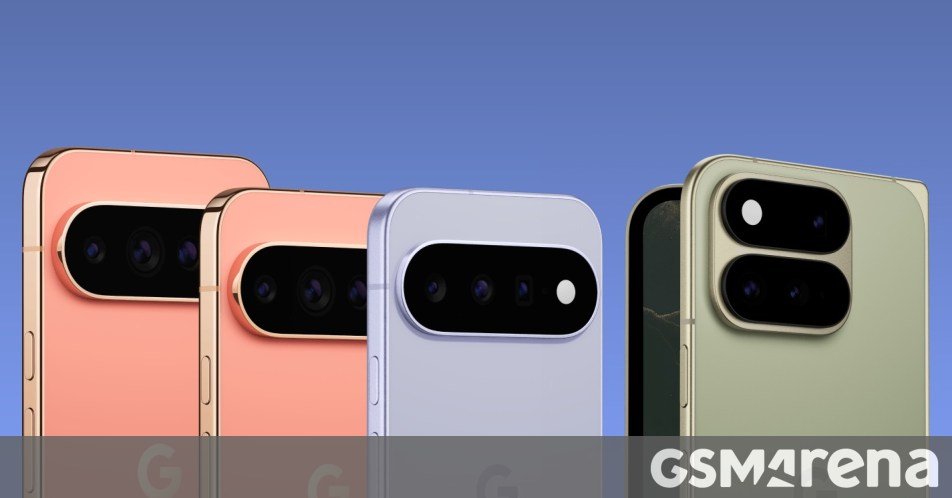
Google's Pixel 11 series launches to a skeptical audience. A GSMArena poll of thousands reveals widespread price resistance – the $1,099 Pro and $1,299 Pro XL are seen as too expensive, with the $1,799 Pro Fold barely registering interest. Reviewers from WIRED and The Verge confirm the hardware is a minor iterative update: brighter screens, Qi2.2 wireless charging, a larger telephoto sensor, and base storage bumped to 256GB. But the base Pro loses 4GB of RAM (now 12GB) while gaining a $100 price hike. The real story is software. Rambler, an on-device AI voice-to-text tool in Gboard, wows reviewers with its ability to clean up speech, format messages, and even romanize and translate languages like Malayalam. Meanwhile, Google's headline AI features – Proactive Assistance (contextual chips in Messages) and HiLight (a multi-color LED in the camera flash) – disappoint. Proactive Assistance requires overly specific trigger phrases and vanishes too quickly; HiLight only works for Gemini voice sessions (while phone is face down) and calls from five favorite contacts with just five color options. Camera improvements are real but incremental: Portrait mode finally handles hair better, Night Sight is faster, new "Camera Looks" offer film-style processing profiles, and Magic Capture auto-extracts photos/video from recordings – though you still need to watch the screen to frame shots. The 120x "Pro Res Zoom" leans heavily on generative AI and shows artifacts. Battery life averages four hours screen-on time. Qi2 magnetic charging is a welcome exclusive among Android flagships.
Why This Is Happening
Google is doubling down on AI-as-differentiation because its custom Tensor silicon still lags Qualcomm and Apple in raw GPU performance, making gaming a weak spot. With hardware innovation plateauing across the industry, Google's strategy is to own the "helpful AI" layer – voice, camera, proactive assistance – to justify premium pricing. The RAM cut and price hike reflect rising component costs and margin pressure. Rambler showcases the advantage of tight integration between Tensor's TPU, Gboard, and Gemini Nano. HiLight and Proactive Assistance feel rushed to market to match Apple Intelligence and Galaxy AI marketing cycles. The foldable's neglect signals Google treats it as a niche halo product, not a volume driver. Meanwhile, the Pixel 11a and base Pixel 11 (same Rambler, same main camera, lower price) cannibalize Pro appeal, especially as Google extends flagship software features downward.
Key Industry Impact
- Big tech: Google's hardware business remains a showcase for Android and AI, not a volume player; Tensor roadmap under scrutiny
- Startup ecosystem: On-device AI tooling (voice, vision) sets new baseline for app developers building for Pixel
- Developers/engineering: Tensor G6 optimization gaps (Genshin) highlight need for better GPU driver support and game dev partnerships
- Consumer technology: Voice-first interfaces (Rambler) may accelerate shift from typing; Camera Looks brings computational photography styles to mainstream
- Regulatory implications: On-device processing for voice translation/transcription reduces cloud data exposure – a privacy plus
- Business competition: Apple Intelligence and Galaxy AI now have a direct benchmark in Rambler; Qi2 adoption pressures accessory ecosystem standardization
Impact on People
- Consumer experience: Rambler genuinely saves time and reduces friction; HiLight and Proactive Assistance add clutter without reliability
- Privacy/data usage: Rambler and Proactive Assistance run largely on-device; less cloud dependency than rivals' cloud-heavy AI
- Employment/jobs: Minimal direct impact; but AI-assisted creation tools (Magic Capture, Creator Suite) lower barrier for content creators
- Pricing/costs: $100 price increase on Pro with RAM cut feels hostile; Pixel 11 ($799?) and 11a ($499?) become value leaders
- Accessibility: Rambler's filler-word removal, punctuation, and language romanization are major wins for dyslexic, motor-impaired, and multilingual users
- Daily life: Qi2 magnets finally bring MagSafe-level accessory convenience to Android; battery life demands midday top-up for heavy users
Key Technologies
- AI: Gemini Nano (on-device), Rambler (voice processing), Proactive Assistance (contextual LLM), generative zoom upscaling
- Cloud: Limited – some Proactive Assistance may use cloud for OpenTable reservations; Video Boost for 4K Magic Capture
- Hardware: Tensor G6 (CPU/TPU/ISP), 50MP main sensor, 48MP 5x telephoto (30% more light), 3,600-nit displays, Qi2.2 (25W), Qi2 magnets
- Software: Android 15/16, Gboard integration, Camera Looks (computational style profiles), Magic Capture (AI curation), Creator Suite (teleprompter)
- Cybersecurity: Not a focus in coverage; Titan M2 security chip presumed continued
- Platforms: Pixel-exclusive features (Rambler, HiLight, Proactive Assistance, Camera Looks, Magic Capture)
- Infrastructure: On-device TPU acceleration critical for latency-sensitive features
Key Companies
- Major corporations: Google (Pixel, Tensor, Android, Gemini, Gboard), Apple (iPhone 17 Pro comparison), Samsung (Galaxy AI rival), Qualcomm (Snapdragon 8 Gen 4 competitor)
- Startups: None directly featured; HoYoverse (Genshin Impact/Zenless Zone Zero) as key game partner for optimization
- Government agencies: None
- Investors/partners: OpenTable (Proactive Assistance integration), accessory makers benefiting from Qi2 standardization
Future Outlook
Rambler will likely expand to Pixel 10 and 9 series via Feature Drop – its on-device nature makes backporting feasible. Proactive Assistance needs system-wide integration (WhatsApp, Slack, Gmail) and looser trigger logic to deliver on "help you use phone less" promise. HiLight faces likely quiet deprecation like the temperature sensor unless Google opens full RGB customization and app mapping. Gaming performance must improve via Tensor G7 GPU leap or deeper Vulkan driver work – otherwise Pro models lose credibility at $1,100+. Camera Looks could evolve into a community marketplace for computational styles. The Pixel 11a and base 11 will outsell Pro models by wide margins, forcing Google to either differentiate Pro more aggressively (satellite? UWB? desktop mode?) or accept a two-tier strategy. Foldable future hinges on price drop and hinge durability proof. Qi2 adoption across Android 2025 flagships will normalize magnetic accessories.