

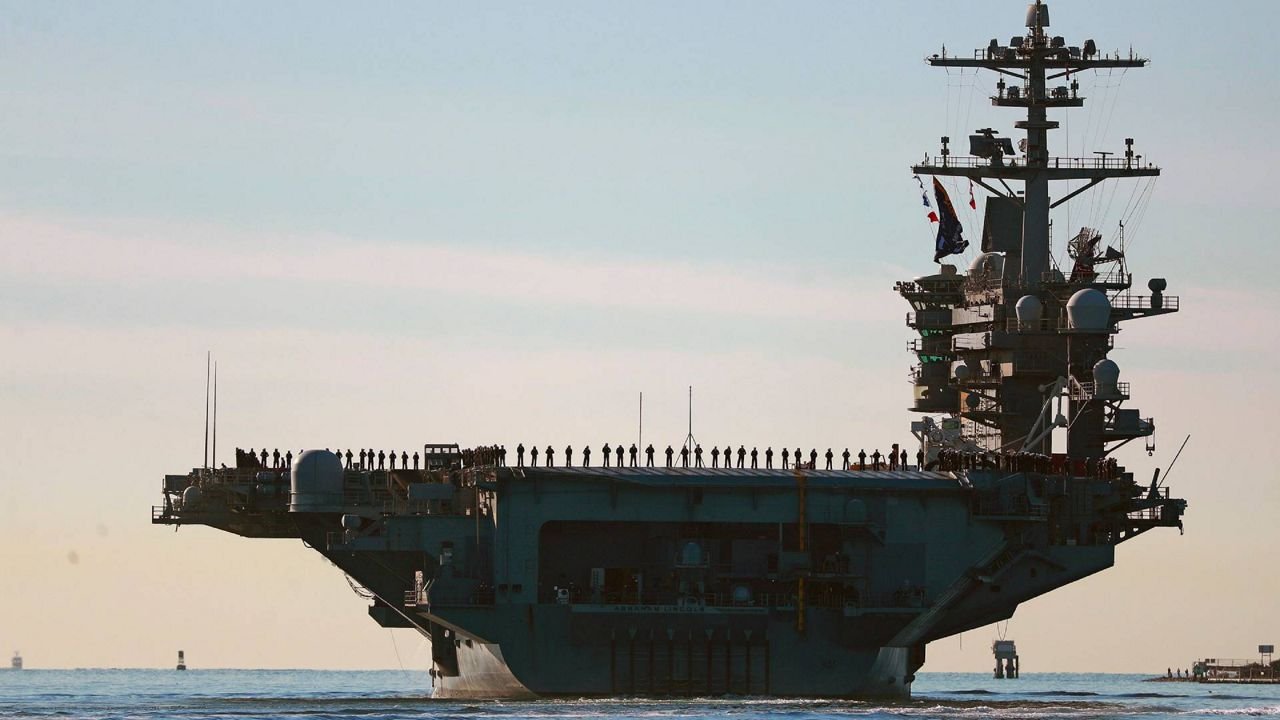
Trump Says 260‑Day Carrier Deployment Is “Not Nearly Long Enough” While Sailors Wonder If They’re on a Never‑Ending Cruise
What’s Happening at a Glance
- President Trump dismissed concerns about the USS Abraham Lincoln’s record 260‑day deployment, calling it insufficiently long.
- Democratic lawmakers and veterans’ advocates warn of mental health strains and supply shortages aboard the carrier.
- The Navy reports no rise in suicidal ideations but acknowledges a sailor went overboard in early August and was rescued.
- USS George Washington is en route to replace the Lincoln as part of the ongoing U.S. naval presence against Iran.
Summary
President Trump downplayed the extended deployment of the USS Abraham Lincoln, which has been at sea for over 260 days supporting operations against Iran, stating the length is “not nearly long enough” and that the ship will soon be replaced by another carrier. His remarks came amid growing alarm from sailors’ families, Democratic senators such as Richard Blumenthal and Ruben Gallego, and veteran Rep. Jason Crow, who argue the prolonged tour is harming mental health and straining equipment. Defense Secretary Pete Hegseth countered that reports of poor conditions are “completely misrepresented,” while the Navy said it has not observed an increase in suicidal thoughts, though it confirmed a sailor went overboard in August and was rescued. The USS George Washington, which departed Vietnam recently, is slated to take over the Lincoln’s role in the Middle East, where the U.S. maintains a blockade of Iranian ports in the Strait of Hormuz despite recent de‑escalation of hostilities.
Why This Is Happening
The extended carrier deployment stems from the Trump administration’s strategy to maintain pressure on Iran through a persistent naval presence in the Gulf, including a blockade of Iranian ports. After a period of heightened tensions, the U.S. has kept forces in the region to deter Iranian aggression, even as diplomatic overtures have reduced immediate conflict risks. Politically, Trump’s rhetoric emphasizes toughness and military readiness, framing long deployments as a sign of resolve, while Democrats and veterans’ groups use the situation to question the administration’s care for service members and demand transparency from the Pentagon. The Navy’s operational security policies limit public data on health incidents, fueling speculation and criticism.
Impact on Americans
- Sailors and their families face prolonged separation, heightened stress, and uncertainty about mental‑health support.
- Taxpayers bear the cost of sustaining two carrier strike groups in the Middle East for an extended period.
- Military readiness may be affected by wear on ship systems and crew fatigue, potentially impacting future deployments.
- Public trust in defense leadership could erode if perceptions of inadequate care for troops persist, influencing voter attitudes toward military spending and veteran affairs.